On the afternoon of 2026 year 8 month 27, the Shanghai Municipal Government Information Office held a press conference on the "Start of the 15th Five-Year Plan" series to introduce the "15th Five-Year Plan for the Construction of Hongqiao International Central Business District" (hereinafter referred to as the "Plan") and answer reporters' questions.
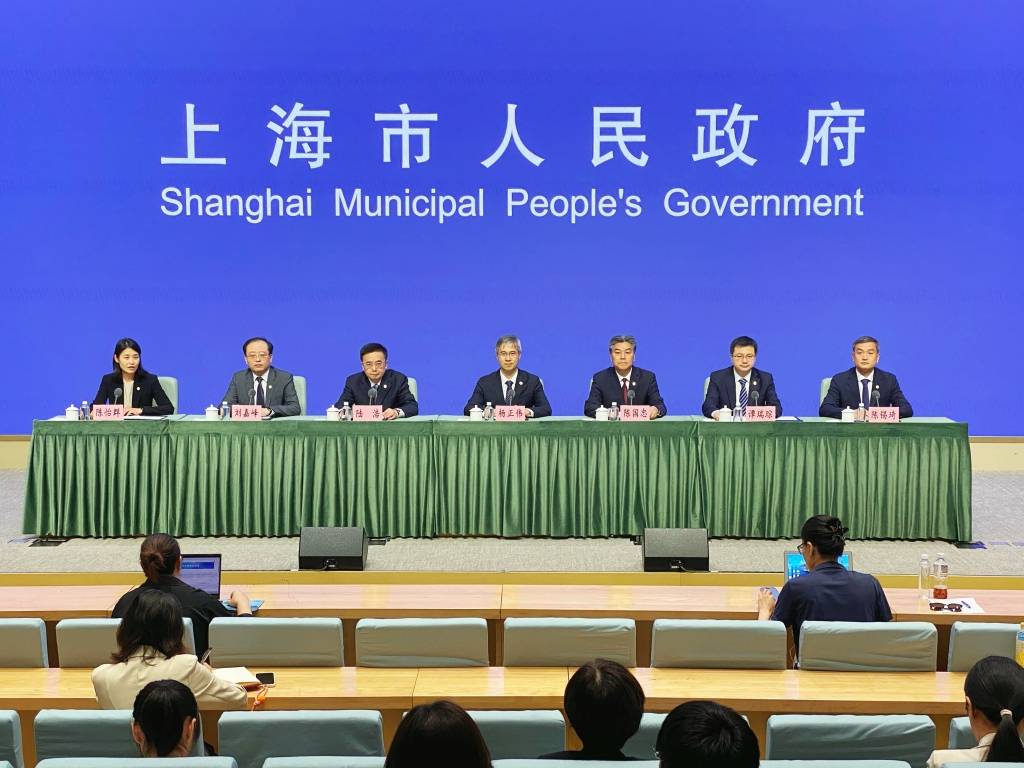
On the afternoon of 2026, Month 8, Day 27, the Shanghai Municipal Government Information Office held a press conference on the "Starting the '15th Five-Year Plan'" series.
Yang Zhengwei, Executive Deputy Director of the Hongqiao International Central Business District Management Committee, explained that the Plan establishes 9 quantitative indicators across three dimensions: comprehensive economy, core functions, and district quality. It aims to achieve continuous growth in economic volume, headquarters economy, and trade capacity during the 15th Five-Year Plan period, while comprehensively strengthening innovation capabilities and urban development. By 2030, the business district will be essentially transformed into a globally influential central vitality zone and a landmark area for reform and opening up in the new era.
The Plan outlines 5 key tasks, covering optimization of the "Grand Commerce" function, enrichment of the "Grand Exhibition"内涵, strengthening of the "Grand Transportation" advantage, enhancement of "Grand Tech Innovation" empowerment, and implementation of the People's City concept.
9 Quantitative Metrics Across Three Dimensions
Yang Zhengwei explained that developing the "Plan" focuses on three key areas. First, aligning with national strategy: by elevating political awareness and fully benchmarking against the national and municipal 14th Five-Year Plan, we anchor our positioning as the core hub of the Hongqiao International Open Hub to systematically map out a five-year development blueprint toward the 2035 vision.
Second, strengthen collaborative openness. Leverage China Unicom's hub advantages domestically and internationally to advance the development of "comprehensive transportation, large-scale exhibitions, major business sectors, and cutting-edge innovation," steadfastly guiding high-quality growth through high-level two-way opening-up.
Third, adhere to a problem-oriented approach. Focus on key challenges, refine task measures, and systematically deploy 5 major pillars with 19 specific initiatives centered on expanding core functions, enhancing urban quality, and optimizing functional layout planning. This will involve implementing 16 major projects to achieve "expanded functions, improved quality, and optimized layout."
The development goals for this plan are summarized as "Three Highs and Three New": First, achieve new breakthroughs in high-level two-way opening up by enhancing external openness and deepening coordinated regional integration within the Yangtze River Delta. Second, realize a new leap in high-quality development by strengthening four core functions and comprehensively elevating economic capacity and regional competitiveness. Third, showcase a new image of a high-quality international urban district through continuous optimization of spatial layout and accelerated improvement of high-standard public services.
To translate development goals into tangible results, the Plan establishes 9 quantifiable indicators across three dimensions: comprehensive economy, core functions, and district quality. It aims to achieve continuous growth in economic scale, headquarters economy, and trade capabilities during the 15th Five-Year Plan period, while comprehensively strengthening innovation capabilities and urban construction. By 2030, the business district will be fully established as a globally influential Central Activity District and a landmark area for reform and opening-up in the new era.
5 key tasks
The Plan outlines 5 key tasks. First, optimize "Big Business" functions to enhance the level of opening up. We will build a new highland for high-level opening up, promote quality improvement and upgrading of the new platform for international trade centers, and aim to grow the scale of service trade from 179 billion USD to approximately 230 billion USD. At the same time, we will establish the first-stop service center for Yangtze River Delta enterprises going global and upgrade the Hongqiao Overseas Development Service Center. We will accelerate the agglomeration of high-energy headquarters, aiming to add around 125 more municipal-recognized corporate headquarters by the end of the 14th Five-Year Plan period, building on the existing 283.
Second, enrich the concept of "mega-exhibitions" and amplify the spillover effects of the CIIE. Continuously host high-caliber events such as the CIIE and major international conferences, normalize innovative policies on exhibition goods taxation and customs supervision, and establish a long-term mechanism to convert exhibition items into marketable products and exhibitors into investors. Fully develop the core hub for an international convention and exhibition capital by attracting a cluster of high-standard, high-quality professional exhibitions. Actively promote synergy among culture, commerce, tourism, sports, and exhibitions, strengthen coordination between the National Exhibition and Convention Center and surrounding commercial facilities, draw more high-traffic major events to the area, and continuously unlock the comprehensive spillover value of exhibitions.
Third, leverage our "comprehensive transportation" advantage to strengthen internal and external connectivity and boost traffic conversion. We will focus on transforming the annual flow of over 4 billion passenger trips into a sustained factor "stock," converting it into new momentum for regional economic development. Moving forward, we will continue to optimize the "one main hub with four auxiliary hubs" comprehensive transportation system, accelerate key projects such as the westward extension of Line 13, the Jiamin Line, and the eastward extension of Yingbin Third Road, to build a denser multi-level regional transportation network and enhance interconnectivity. We will deepen cross-regional collaboration within the Yangtze River Delta, leveraging transportation advantages to promote interconnected infrastructure, shared public resources, and two-way factor flows, creating a one-hour work commute circle in the surrounding areas and a half-day business activity circle across the Yangtze River Delta.
Fourth, strengthen "Big Sci-Tech" empowerment to drive collaborative innovation in the Yangtze River Delta. Lead industrial upgrading through technological innovation: enhance the quality and efficiency of traditional strengths such as trade and exhibitions; vigorously develop emerging industries like life sciences; and strategically position future sectors including brain-computer interfaces. Accelerate the construction of a Yangtze River Delta manufacturing R&D cluster, establishing a "Hongqiao R&D + Yangtze River Delta Manufacturing + Global Application" collaborative model. Attract a range of technology innovation platforms and R&D headquarters, aiming to add approximately 100 new R&D centers by 2030. Simultaneously, attract international, professional, and innovative talent to build a talent hub serving the Yangtze River Delta.
Fifth, we will put into practice the people-centered city concept to build a high-quality international new district. We will coordinate urban renewal, public services, and ecological and smart development across all sectors, ensuring the district is both internationally distinctive and warmly inclusive for residents. On one hand, we will advance four flagship projects in the core area—Hongchang Green Hills, Elevated Flying Rainbow, Waterfront Showground, and Vibrant Qingzhou—to comprehensively enhance functional integration, spatial connectivity, and regional identity. On the other hand, we will continue expanding access to high-quality public services by accelerating construction of education facilities such as the nine-year integrated school north of Songze Viaduct and the Fudan University Hongqiao Medical Innovation Park; upgrading service capabilities at institutions like the New Hongqiao International Medical Center; and coordinating the development of parks and urban greenways, including Qianwan Park.
Yang Zhengwei stated that the Hongqiao International Central Business District will optimize its functional layout, coordinate and guide the "One Core and Four Zones" to leverage strengths and enhance characteristics, clarify functional positioning, and establish a spatial development pattern featuring overall coordination, differentiated development, and complementary advantages across the region.
Source: The Paper